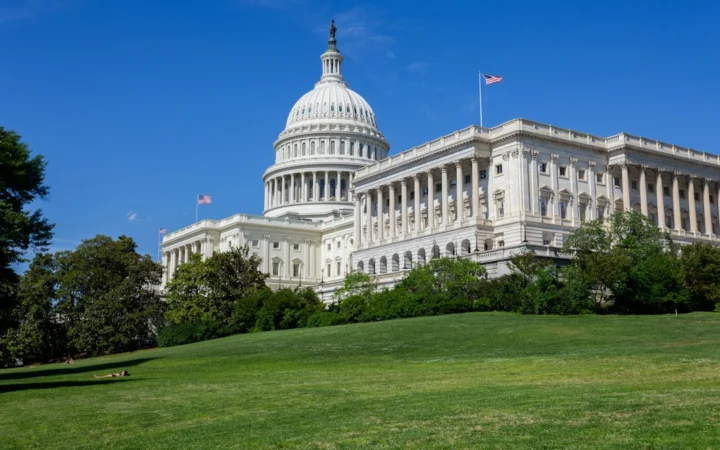
Capitol Hill is facing yet another budget deadline. Lawmakers in Washington have a familiar choice to make whenever funding runs dry. They can pass stopgap measures to keep the lights on, or they can let federal spending bills stall out entirely and trigger a funding lapse. Both options represent distinct approaches to governing the world’s largest economy. Neither strategy leaves Capitol Hill looking particularly functional.

For observers watching from across the Atlantic, US fiscal standoffs often look baffling. Billions of dollars hang in the balance while partisans argue over policy riders. Understanding how Congress manages its ledger requires looking closely at these two primary mechanisms. Each brings massive political costs and real economic consequences.
The Mechanics of Continuing Resolutions
A continuing resolution acts as a temporary financial bridge. When Congress cannot agree on full-year appropriations before the fiscal year ends on September 30, lawmakers reach for a stopgap. These federal spending bills maintain existing funding levels for a set number of weeks or months.
Lawmakers usually present these measures as pragmatic compromises. They buy time for negotiations. They prevent immediate agency closures. They stop federal employees from missing paychecks on short notice.
Stopgap legislation creates deep operational headaches inside federal agencies, though. Program managers cannot start new initiatives or sign long-term contracts. They operate on autopilot, spending money at the exact rate they did the previous year while inflation eats away at purchasing power. New national security threats receive no extra funding because budgets remain frozen in the past.
Military leaders frequently testify against stopgap measures. They argue that frozen budgets waste millions of taxpayer dollars, while defence contractors face supply chain bottlenecks because procurement orders stall. Passing short-term patches over and over has simply become a lazy habit in Washington. It replaces actual budgeting with endless extensions.
The Brinkmanship of Government Shutdowns
When negotiations collapse completely, the alternative is a funding lapse. Non-essential government operations screech to a halt. National parks lock their gates. Federal courts scale back civil dockets. Hundreds of thousands of civil servants work without pay or stay home entirely.
Some lawmakers view these funding crises as a necessary weapon. Hardline conservatives and progressive insurgents alike have used shutdown threats to force policy concessions, refusing to vote for appropriations unless their preferred policy riders make it into the final text.
This approach treats fiscal deadlines as leverage points. Proponents argue that only extreme pressure forces both parties to cut wasteful spending or address long-term debt. They believe ordinary Americans care more about fiscal restraint than temporary administrative friction.
The reality on the ground looks grim. Coast Guard members patrol US waters without receiving their monthly salaries. Federal aviation inspectors manage air traffic control towers while worrying about their grocery bills. Small businesses waiting on federal loan approvals find their applications sitting on empty desks. Economists point out that prolonged shutdowns shave fractions off the quarterly gross domestic product. Much of that lost economic output never returns.
Financial markets often react nervously to these fiscal standoffs, creating ripples that global investors monitor closely, much like shifts tracked in US stock market news when legislative deadlines approach.
Comparing the Real-World Trade-Offs
Weighing these two strategies requires looking past political rhetoric. Continuing resolutions preserve basic stability. They keep essential services running and prevent sudden shocks to the wider economy.
Yet stopgap measures reward procrastination. They encourage congressional leadership to avoid hard choices until the absolute last minute. Months pass with zero progress on standard appropriations bills until a massive omnibus package drops at midnight, spanning thousands of pages that nobody reads before voting.
Shutdowns offer the opposite extreme. They inject chaos into the system to force a resolution. Sometimes they succeed in securing minor spending cuts or targeted policy reforms. More often, they achieve nothing except bad headlines and widespread public frustration.
Public opinion polls consistently show that voters blame the party in power when government services break down. Lawmakers know this political reality well. That explains why shutdowns rarely last very long once the real-world pain becomes visible to constituents.
Which Funding Strategy Actually Works Better?
Neither approach represents good governance. Federal spending bills are designed to pass through regular order, where committees debate priorities and members vote on individual items. The current system abandons this framework entirely.
If forced to choose the lesser of two operational evils, continuing resolutions win out. They are tedious, inefficient, and frustrate agency directors. But they do not inflict direct financial harm on millions of hardworking federal employees.
A functioning democracy requires predictable funding. Relying on perpetual stopgaps damages institutional competence over the long haul, and embracing manufactured crises as a standard negotiation tactic damages public trust even faster. Washington needs a return to genuine budgeting. Until that happens, Americans will keep watching the same tired drama play out every autumn.
For more information, visit our website.
Related reading
Update: Tracking US National Guard Deployments
Update: US Iran Diplomacy: The Quiet Channels Shaping Middle East Tensions