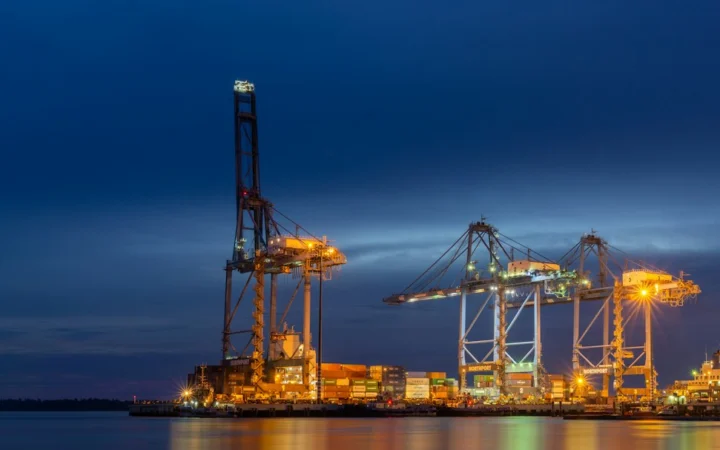
When military planners talk about operations in the Persian Gulf, they rarely start with aircraft carriers or missile batteries. They start with fuel. Without a constant stream of diesel and jet propellant, no strike group moves an inch. Operating heavy armor, naval fleets, and fighter squadrons across vast desert terrain demands an intricate logistical backbone. US Iran war logistics rely on a sprawling network of pipelines, tanker trucks, and maritime routes that stretch from regional supply hubs right up to forward operating bases.

The Backbone of Regional Fuel Supply Lines
Moving millions of gallons of petroleum across the Middle East isn’t simple. It’s a massive, continuous puzzle. Most people imagine gleaming pipelines running straight from oil fields into military compounds. The reality is far messier. A mix of commercial shipping lanes, contracted civilian haulers, and military tankers keeps the operation afloat. Supply lines snake through narrow straits and across crowded highways, making them vulnerable to disruption.
Commercial tankers chartered by the Department of Defense do much of the heavy lifting during routine rotations. They move bulk fuel from refineries in the Arabian Peninsula to major distribution hubs in Bahrain, Qatar, and the United Arab Emirates. From those central hubs, military logistics specialists transfer the fuel into smaller tactical vehicles or pipeline networks. Every single gallon gets accounted for in massive digital ledgers managed by the Defense Logistics Agency.
Vulnerabilities in Strategic Chokepoints
Geography dictates everything in Middle Eastern military strategy. The Strait of Hormuz remains the most critical pressure point for any regional conflict. Roughly a fifth of the world’s petroleum passes through this narrow waterway daily. If tensions spike, commercial shipping slows down drastically. Insurance rates skyrocket. Captains hesitate to enter waters within range of shore-based anti-ship batteries.
When maritime routes face severe threats, military planners pivot to overland alternatives. They rely on heavily guarded truck convoys moving supplies across desert highways from friendly ports on the Red Sea. These overland routes present their own headaches. Long desert stretches mean high security costs, vehicle maintenance issues, and constant threat monitoring. As we explored in our breakdown of US Iran war logistics tracking fuel supply lines across the Middle East, maintaining these pathways requires precise coordination between host-nation governments and US transport units.
Contrasting Reality With Public Misconceptions
It’s easy to assume the US military can simply manufacture or secure all the fuel it needs locally without friction. People often think local refineries operate at the beck and call of foreign commanders. That isn’t how sovereign nations work. Host nations retain strict control over their domestic energy output. They negotiate every barrel sold to foreign military forces through complex diplomatic agreements.
Another common myth suggests that modern aircraft and tanks can run on standard commercial diesel or jet fuel straight out of a civilian pump without modification. Military specifications demand specific additives to prevent freezing at high altitudes or gumming up turbine engines. Logistics teams must treat and filter commercial supplies carefully before distribution. A contaminated batch of fuel can ground an entire squadron of fighter jets in minutes.
How Energy Markets React to Supply Line Shifts
Military fuel demands directly intersect with global oil markets. When logistics commanders increase their procurement volume during heightened readiness states, local spot prices often react immediately. Traders watch military shipping movements as key indicators of geopolitical risk. If tanker traffic slows down near key regional bases, energy traders price that anxiety right into Brent crude futures.
Understanding these dynamics helps explain why energy markets remain jittery whenever tensions rise in the Gulf. As detailed in our report on the US Iran conflict energy impact, any disruption to regional infrastructure sends immediate shockwaves through international markets. Supply chains don’t exist in a vacuum. A delay in port clearance for a single fuel tanker in the Gulf of Oman can ripple across pricing boards in London and New York before the day is out.
Keeping military machinery running in the Middle East is an exercise in immense patience and bureaucratic precision. It takes thousands of civilian contractors, military drivers, and logistics officers working around the clock to keep the fuel flowing where it needs to go.
For more information, visit our website.
Related reading
- US Tariff Policy Changes: What British Exporters Need to Know Right Now
- How UK Expats Track US Iran War Risks from London