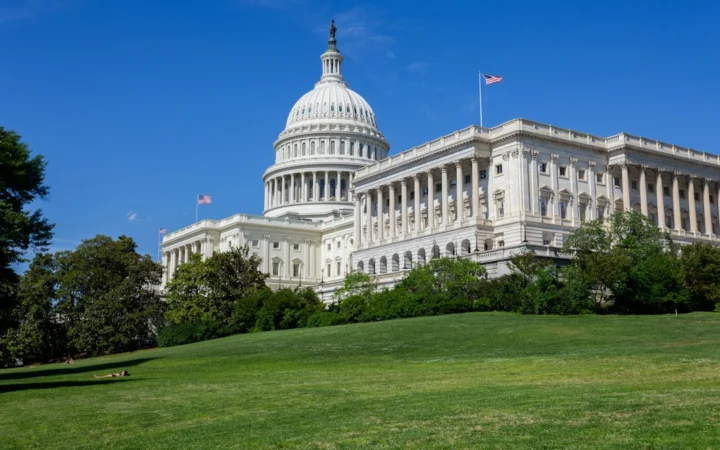
American labour laws often baffle British observers, especially regarding pay floors. The US federal minimum wage has been stuck at $7.25 an hour for well over a decade. Congress locked in that exact rate back in 2009. They haven’t agreed on a legislative update since. That single figure shocks people in the UK, where national minimum pay rates adjust every single year based on independent Low Pay Commission recommendations.

What is the current US federal minimum wage and who does it cover?
Federal law establishes a baseline floor for hourly workers across the United States. Congress passed the Fair Labor Standards Act ages ago to protect employees from extreme exploitation. Today, that baseline sits at $7.25 an hour. It covers most private and public sector employees engaged in interstate commerce.
Yet millions of American workers actually earn more than this baseline. Federal rules carve out exemptions for specific job categories. Tipped employees, for instance, can legally receive a cash wage as low as $2.13 an hour—provided their tips bring total earnings up to the standard minimum. Student workers, seasonal amusement park staff, and certain agricultural labourers face entirely different pay structures.
Only Congress has the power to alter this national pay floor. Passing a federal wage hike requires a bill to clear both the House and the Senate before it ever reaches the president’s desk. Intense partisan division in Washington means achieving that consensus has been impossible for years. Lawmakers fight constantly over whether raising the floor actually helps workers or just crushes small businesses.
Why hasn’t the US federal minimum wage increased in years?
Political gridlock routinely blocks major economic reforms in Washington. Democrats keep pushing bills to shove the baseline toward $15 an hour, pointing out that inflation has completely eaten away at the current rate. Republicans counter that a sharp, mandatory federal hike would force employers to slash jobs, cut staff hours, or jack up prices for consumers.
Economic differences between individual states complicate things further. Living costs in rural Mississippi look nothing like expenses in downtown Manhattan or Silicon Valley. Lawmakers from lower-cost regions argue that a high national mandate punishes local employers who simply cannot afford massive payroll jumps. Because the United States spans such a vast economic landscape, crafting a single number that suits every community is a massive political hurdle.
Inflation makes the frustration brutal for low-income workers. Prices for groceries, housing, and fuel climbed significantly over the last several years. At $7.25 an hour, a full-time employee working forty hours a week pulls in roughly $15,000 annually before taxes. That figure falls well below federal poverty guidelines for a family. Even though public polling shows broad support for higher pay floors, federal legislation consistently stalls out in committee.
How do individual states bypass the federal rate?
American federalism lets states write their own rules when Washington drops the ball. The federal pay floor is just a legal minimum, not a ceiling. States can mandate higher wages within their borders, and dozens do.
California, Washington state, and New York established progressive schedules pushing their local minimums well past $15 an hour. Cities and counties within those states often implement even higher local ordinances. Seattle and San Francisco enforce local rates that completely outpace their respective state requirements.
Conversely, several states stick strictly to the federal standard. Alabama, Louisiana, Mississippi, South Carolina, and Tennessee have no state-level minimum wage laws whatsoever. Employers operating there default to the $7.25 federal baseline. This creates a messy, patchwork regulatory map across the country. A worker crossing a state line might see their legally mandated hourly pay double instantly.
Voters in conservative and progressive states alike frequently bypass legislative gridlock through ballot initiatives. Citizens collect signatures to shove wage increase measures directly onto election ballots. Voters routinely approve them, proving public appetite for higher pay vastly outpaces legislative action.
What does the US federal minimum wage mean for UK companies expanding stateside?
British business owners launching operations in America have to navigate this wild web of state and federal pay rules. Ignoring local labour statutes brings severe legal penalties and instant reputational damage. A UK firm setting up a retail store in Texas faces vastly different payroll math than a tech startup opening an office in Massachusetts.
Smart founders research local labour markets before picking a headquarters location. Relying on the baseline US federal minimum wage for financial forecasting is a dangerous mistake. Competing for talent in major American cities requires offering competitive wages way above statutory minimums anyway. Tight labour markets mean job seekers simply ignore employers offering entry-level baseline pay.
Compliance requires close coordination with local HR pros or American payroll firms. Federal overtime rules also kick in after forty hours of work in a standard week, adding another headache to staff budgeting. Understanding these regional pay differences keeps British firms out of hot water as they grow their transatlantic footprint.
For more information, visit our website.
Learn more on Wikipedia: US federal minimum wage.
Related reading
- How US Diplomatic Evacuations Work in the Middle East During Crises
- US Federal Budget News: How Continuing Resolutions Keep Washington Funded
Update: US Iran Maritime Security Operations
Update: US Immigration Policy Updates: What the Latest Washington Changes Mean for Applicants