- Why Local UK Accounts Fall Short for US Revenue
- Step 1: Form Your US Legal Entity
- Step 2: Secure Your Employer Identification Number
- Step 3: Choose Where to Open a US Business Bank Account
- Step 4: Prepare Your Verification Documents
- Step 5: Submit Your Application and Pass Compliance
- Funding and Using Your New Account
British founders scaling stateside often hit a frustrating wall when they try to manage US dollars. Traditional high street banks in London rarely let you set up a commercial account without a physical branch visit across the Atlantic. Still, thousands of UK entrepreneurs manage it every month. You can successfully open a US business bank account without ever boarding a transatlantic flight. You just need the right paperwork and a clear sequence of steps.

Why Local UK Accounts Fall Short for US Revenue
Receiving funds from American clients through a standard British corporate account drains profits fast. Banks slap heavy currency conversion fees on every incoming wire. They also take days to clear funds. American vendors often refuse to pay via international SWIFT transfers because of high fees on their end. They expect ACH payments or domestic wire transfers. Holding funds in US dollars shields your margins from exchange rate swings. It also makes your business look local to American customers.
Many UK business owners try to use personal multi-currency wallets first. That works for freelance side projects. Once you scale past a modest revenue threshold, payment processors freeze those accounts for business activity. You need a dedicated corporate setup. Let’s walk through the exact process to get one sorted.
Step 1: Form Your US Legal Entity
US banks will not talk to you if you operate solely as a UK limited company without a US presence. You need a formal American business structure. Most British expats choose a Limited Liability Company (LLC) or a C-Corporation. Delaware and Wyoming remain the top choices for foreign founders because of low state fees and business-friendly courts.
You can hire a registered agent service to handle the formation paperwork remotely. This takes about a week. The state will issue your Articles of Organization. Keep this document safe. Your chosen bank will demand it before approving your application.
Step 2: Secure Your Employer Identification Number
Your new LLC needs a tax ID before any financial institution will touch it. This is called an Employer Identification Number, or EIN. Think of it as the American equivalent of a UK Company Registration Number combined with a PAYE reference.
Applying for an EIN used to require mailing forms to the Internal Revenue Service and waiting months. Today, you can call the IRS directly once your company is formed. An authorized representative can obtain your number over the phone in minutes. Alternatively, specialized formation services handle this for a small fee. Do not skip this step. Without an EIN, you cannot pass basic compliance checks.
Step 3: Choose Where to Open a US Business Bank Account
Traditional legacy banks like Bank of America or Chase demand an in-person appointment with a local branch manager. They might ask for proof of a physical lease in the US. That makes them useless for remote UK founders.
Fintech platforms solved this problem. Companies like Mercury, Relay Financial, and Wise Business cater specifically to international founders. They partner with insured US partner banks to provide fully functioning checking accounts with routing and account numbers. Mercury and Relay operate entirely online. They charge zero monthly maintenance fees and require no minimum balance for basic tiers. They integrate smoothly with accounting software like Xero and QuickBooks.
Review their terms before applying. Some platforms restrict certain industries like crypto, adult entertainment, or dropshipping. Pick the provider that fits your specific sector.
Step 4: Prepare Your Verification Documents
Digital banks rely on strict Know Your Customer rules to prevent financial crime. They will ask for a digital bundle of specific records. Gather these files before you start your application to avoid delays.
You will need a valid UK passport for identity verification. Most platforms use biometric scanners that read your passport chip via a smartphone camera. You must also supply your Articles of Organization and your official EIN confirmation letter from the IRS. Have a utility bill or bank statement ready to prove your home address in the UK. Some platforms also request a simple one-page description of what your company sells and who your target audience is.
Keep your details consistent across every document. A typo in your company name between your state filing and your bank application will trigger an automatic rejection.
Step 5: Submit Your Application and Pass Compliance
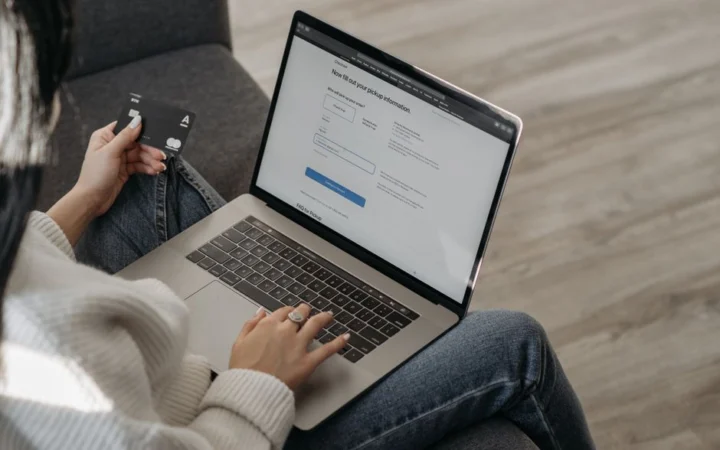
Head to your chosen fintech’s website and fill out the digital onboarding form. Type your details carefully. Upload your passport photo and company documents where prompted.
The compliance team will review your file. This takes anywhere from 48 hours to two weeks depending on how busy their backlog is. They might email you asking for extra clarification on your business model. Answer their questions promptly and transparently. Once approved, your account goes live instantly. You can order virtual debit cards right away and start setting up ACH payments.
As you scale your operations, remember that managing cross-border revenue brings tax obligations on both sides of the Atlantic. For a deeper look at your responsibilities, read our guide on US small business taxes for UK owners to keep your accounts compliant year-round.
Funding and Using Your New Account
Your account is open. Now you need to fund it. Most digital business accounts allow you to push money from a UK multi-currency account using standard wire transfers. Exchange rates apply during this transfer.
Once your funds land, you can pay American contractors, buy software subscriptions in USD, and collect revenue from US-based clients without losing chunks of money to traditional bank fees. Keep your login credentials secure and monitor your dashboard weekly for any compliance updates.
For more information, visit our website.
Related reading
- US Tanker Seizures in the Persian Gulf: What British Exporters Need to Know
- US Export Licenses for UK Tech Firms: Navigating EAR Rules
Update: US Corporate Tax Rates vs UK Corporation Tax: What British Founders Need to Know
Update: US Business Registration Requirements: What UK Founders Need to Know